
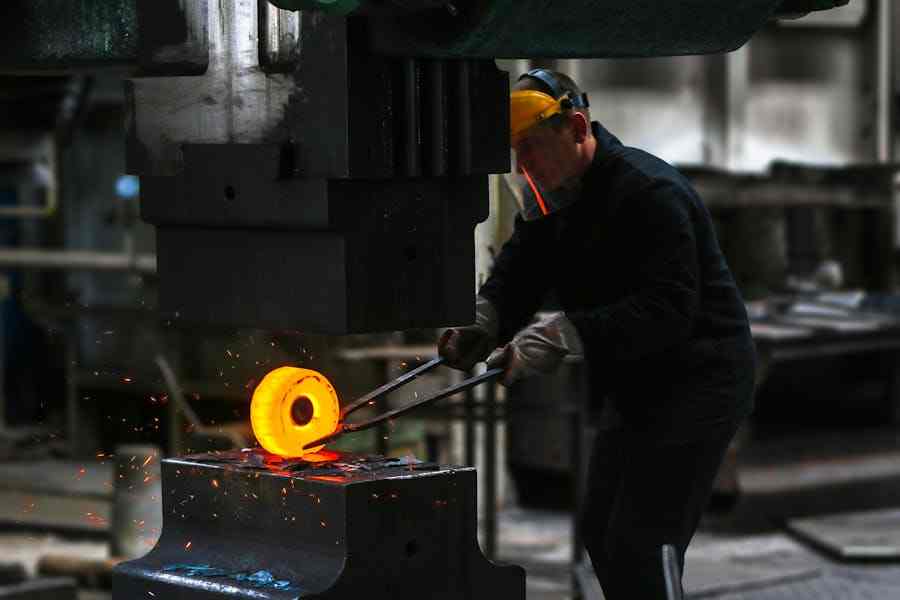
The blast furnace is a cornerstone of the metallurgy industry, enabling organizations to produce high-quality metal without worrying about environmental hazards. The blast furnace design and construction technology have undergone outstanding evolution throughout history. Blast furnace tech has reshaped the steel and iron industry from humble beginnings to sophisticated modern design. This blog outlines the details of the construction of blast furnace technology and the innovations that have been made to improve this system further.
Blast Furnace Design- Journey Of Ancient To Modern World
Blast furnace roots can be traced back to ancient times, specifically in China and Middle Asia. Compared to the contemporary models, these furnaces were small and inefficient. However, these furnaces started a trend and were a game changer for the modernized metal industry.
When medieval Europe adopted the furnace technology, the furnaces got bigger in size and became more efficient. The deployment of water wheels below bellows and the introduction of air helped increase the temperature, allowing iron smelting in larger amounts. These technologies laid the foundation for the industrialized production of iron later in the decade.
The 18th century is known as the turning point for the blast furnace industry. Blast furnace plant design got an upgrade of the hot blast method, which James Neilson introduced. The technique involved preheating the air blown, enabling workers to achieve better fuel efficiency and an accelerated smelting process.
Then came the 20th century, when computers were introduced to enhance the blast furnace smelting process further, allowing more efficiency and accuracy. Additionally, organizations started introducing the by-product recovery system, which helped reduce waste. This also allowed them to store the gases released for other industrial applications.
The trend of saving environmental awareness got attention later in the 20th century, which pressured the iron industry to reduce its carbon footprint. So, new designs were equipped with tech stacks that reduced environmental hazards, such as using pulverized coal, which replaced coke as a fuel. The quest to save the environment became the driving force for improving the design of blast furnaces.
Blast Furnace Design And Construction In The 21st Century
The modern blast furnace design in the 21st century has complex parts that work together to provide the iron and steel industry the profits it seeks. A modern blast furnace design consists of the following parts:
Shell of the furnace: The shell, made of steel, is the outer part that holds all important components.
Inner lining: Inner lining (also known as refractory lining) is made from high-temperature resistant materials. The lining protects the outer shell from high temperatures and chemical reactions.
Charging system: Modern blast furnaces have charging systems from where materials are introduced into the furnace. The charging systems contain hoppers, conveyors, and coke, flux, and iron ore distribution systems.
Hopper and bell: The bell is the cover of the blast furnace, which controls the flow of gases and pressure inside the furnace. Hopper is the part that helps in directing the raw materials into the system.
Blast mechanism: The role of the blast mechanism is to introduce the combination of hot air and oxygen to promote higher temperatures. The blasting system contains tuyeres, hot stoves, and piping components.
Stack and bosh: The stack is the vertical portion of the furnace, whereas the bosh is the widening section. Both these sections help provide space for controlling the rise of gases.
Gas cleaning systems: The gas cleaning mechanism filters out the gases before releasing them into the atmosphere. This system includes scrubbers, dust collectors, filters, and other control mechanisms.
Control and instrumental systems: Lastly, modern furnace design and construction contain high-end control systems, which include actuators, sensors, computers, and instruments that monitor the whole furnace steps. These systems regulate factors such as temperature, humidity, gas flow, and air pressure. The systems help optimize the process and improve the efficiency of furnace performance.
The Future Of Blast Furnace
The world is moving towards modernized solutions. The same is the case with the steel/iron industry. Organizations are trying to improve blast furnace design. The biggest reason is the environmental impact. To reduce the carbon footprint, blast furnace makers are introducing modern tech such as AI to help save the environment. AI is also helping them achieve higher efficiency and performance.
